


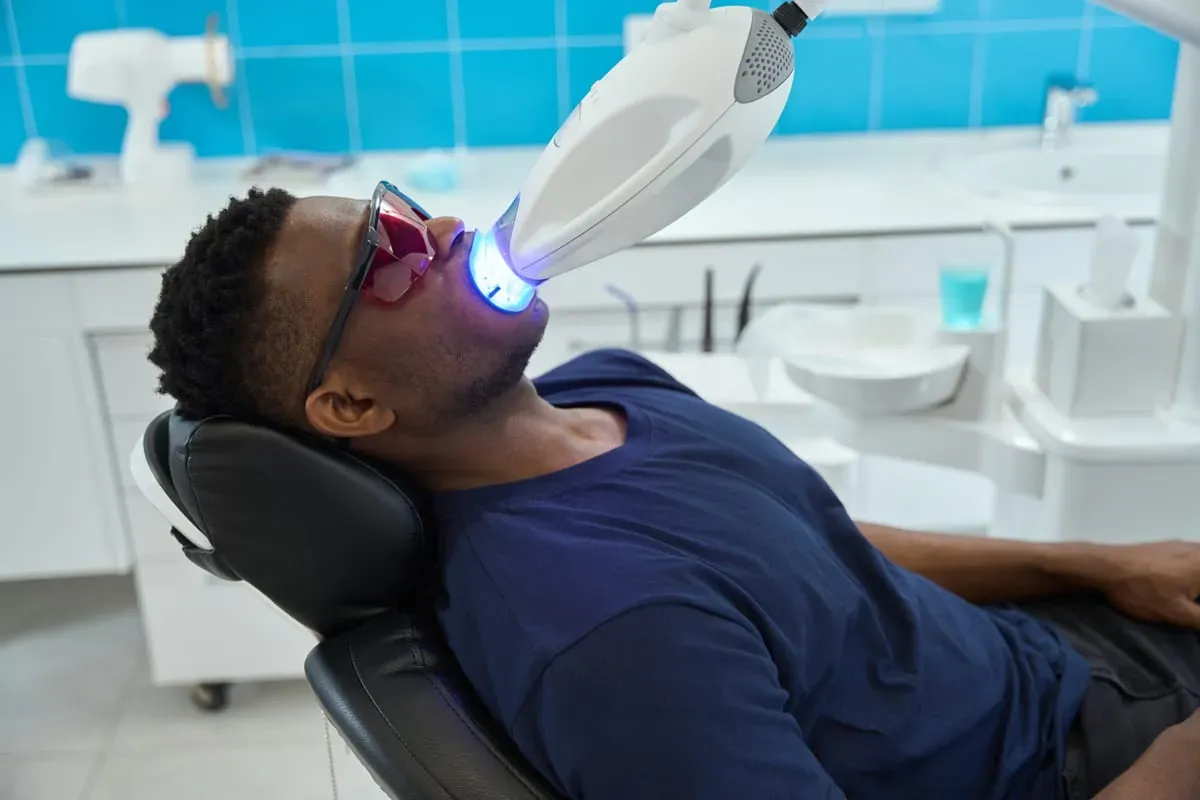
If you have caught yourself covering your smile in photos or wondering why your coffee habit seems to be winning the battle against your toothbrush, you are not alone. Tooth discoloration is one of the most common cosmetic concerns we hear about from patients in Haymarket, and it is also one of the easiest to address when you understand what is actually causing it.
Not every stain responds the same way to whitening, and not every smile needs the same approach. Some discoloration sits on the surface of the enamel and lifts easily with the right treatment. Other staining runs deeper, inside the tooth structure itself, and needs a different strategy altogether. Knowing which category your smile falls into makes a real difference in whether whitening will give you the results you are hoping for.
This article walks through what causes teeth to darken over time, who tends to be a strong candidate for whitening, what separates professional treatment from the drugstore kits lining pharmacy shelves, and how to protect your results once you have them. By the end, you should have a clear sense of whether whitening makes sense for your smile right now.
What Actually Causes Teeth to Discolor
Tooth discoloration generally falls into two categories: extrinsic and intrinsic. Extrinsic stains sit on the outer surface of the enamel and come from everyday habits like drinking coffee, tea, red wine, or dark sodas, as well as smoking or using tobacco products. These surface stains build up gradually, which is why most people do not notice the change until it is fairly significant.
Intrinsic discoloration is different. It happens inside the tooth, often from aging, certain medications taken during childhood, excessive fluoride exposure in early development, or trauma to a tooth that affects the nerve. Enamel also naturally thins with age, which allows the yellower dentin layer underneath to show through more. This is a big reason why teeth tend to look duller in our 40s and 50s compared to our 20s, even with good oral hygiene.
Understanding which type of staining you are dealing with matters because it shapes expectations. Surface stains from coffee or wine typically respond very well to whitening. Deeper intrinsic staining, especially from certain medications, may lighten somewhat but rarely reaches the same bright result. This is exactly why an in-office evaluation is worth doing before investing time or money into a whitening routine.
Who Tends to Get the Best Results
Most adults with healthy teeth and gums are reasonable candidates for whitening, but a few factors tend to predict stronger outcomes. People whose discoloration is primarily surface-level, caused by diet or lifestyle habits, generally see the most dramatic improvement. If your natural tooth color is on the yellower end of the spectrum rather than gray or brown, whitening agents also tend to work more effectively, since yellow tones typically lift more readily than gray ones.
Candidates who have addressed any underlying dental issues first also tend to be happier with their results. Active cavities, cracked teeth, or gum disease should be treated before whitening, both because the bleaching agent can irritate compromised areas and because a thorough cleaning removes the surface buildup that otherwise interferes with even results. This is one reason we often recommend a routine visit for dental cleanings shortly before starting a whitening plan.
Signs Whitening Could Work Well for You
- Your stains are diet-related. Coffee, tea, or wine consumption has gradually dulled your smile over the years rather than a single dramatic event.
- Your gums and enamel are healthy. No active decay, significant sensitivity, or untreated gum disease stands in the way of treatment.
- You have realistic expectations. You understand that whitening brightens natural enamel but will not change the shade of crowns, veneers, or fillings.
- You are willing to maintain results. You are ready to adjust a few habits afterward to keep your smile bright longer.
Professional Whitening vs. Store-Bought Kits
The whitening strips and gel trays sold at pharmacies are not without merit, but they operate under real limitations. Over-the-counter products are legally capped at much lower concentrations of whitening agent than what a dental office can use, which means results come slower and often plateau well before reaching the brightness most patients are hoping for. Generic trays also do not fit the unique contours of your teeth, so the whitening gel can pool in some areas and barely touch others, leading to uneven results.
When you pursue professional teeth whitening through a dental office, you get a custom-fitted approach, a higher concentration of whitening agent applied safely, and a clinician who monitors your gums and enamel throughout the process. This dramatically reduces the risk of the chemical burns and uneven patchiness that sometimes result from ill-fitting drugstore trays. It also means the final shade is something we can actually predict and work toward, rather than a guessing game.
There is also a time factor worth considering. Over-the-counter kits often require weeks of consistent daily use to produce a noticeable change, and many people lose motivation or forget applications partway through. In-office treatment can achieve several shades of improvement in a single visit, with take-home options available to maintain or build on that result afterward.
What to Expect During and After Treatment
A typical in-office whitening visit starts with a check of your teeth and gums to confirm you are a good candidate and to note your baseline shade for comparison. Your gums and soft tissue are protected, and the whitening gel is applied directly to the tooth surface. Depending on the system used, the process may involve a few shorter application cycles over the course of an hour or so, which allows the whitening agent to work in stages rather than sitting on the teeth for one prolonged period.
Afterward, it is common to experience some temporary tooth sensitivity, particularly to cold, for a day or two. This usually fades on its own and can be minimized with desensitizing toothpaste or by spacing out any follow-up applications. Most patients are comfortable eating and drinking normally within a short window, though we typically recommend avoiding deeply pigmented foods and beverages for the first 24 to 48 hours while the enamel is most porous and susceptible to new staining.
Results vary by starting shade and the cause of discoloration, but many patients see an improvement of several shades after a single session. If you are combining whitening with other cosmetic work, such as veneers or bonding, it is generally best to whiten first so any new restorations can be color-matched to your brighter, natural teeth rather than the other way around.
When Whitening Might Not Be the Right Fit
Whitening is not the right solution for every type of discoloration, and part of a good consultation is being honest about that. Teeth that are discolored from old trauma, a root canal, or certain childhood medications often do not respond well to standard bleaching agents because the staining originates deep within the dentin rather than on the surface. In these cases, options like porcelain veneers or dental crowns may offer a more predictable, longer-lasting cosmetic solution.
Whitening also will not change the color of existing dental work. If you have visible fillings, crowns, or bonding on your front teeth, whitening the surrounding natural enamel can actually create a mismatch, making old restorations stand out more rather than blending in. We will flag this during an exam so you are not surprised by the outcome.
Finally, patients with untreated cavities, significant gum recession, or heightened tooth sensitivity are usually better off addressing those issues first. Whitening gel can aggravate exposed dentin or irritated gum tissue, so we will often recommend treating any active dental concerns, sometimes with white fillings or other restorative care, before moving forward with a cosmetic whitening plan.
Making Your Results Last Longer
Whitening is not permanent, but you can stretch your results significantly with a few consistent habits. Rinsing with water after drinking coffee or wine helps limit how long pigments sit on the enamel. A straw for dark beverages reduces direct contact with the front teeth, and keeping up with regular brushing and flossing prevents new surface buildup from dulling your results prematurely.
Routine professional cleanings every six months also play a bigger role than most people realize. They remove the plaque and light surface staining that accumulate between whitening treatments, which keeps your smile looking fresh and can extend the time before you need a touch-up. Many patients also opt for occasional at-home maintenance treatments using custom trays provided by our office, which offer a gentler, more controlled way to refresh your shade every few months.
If you are someone who enjoys red wine, coffee, or tobacco regularly, it is reasonable to expect that you will need touch-ups more often than someone with a lighter diet. That is not a reason to avoid whitening altogether; it simply means building a maintenance rhythm into your regular dental care schedule.
Key Takeaways
- Surface stains from coffee, tea, or wine respond best to whitening, while deeper intrinsic staining may need a different approach.
- Healthy gums and enamel, free of active decay, make for the strongest whitening candidates.
- Professional treatment offers stronger, more predictable, and more even results than over-the-counter kits.
- Existing crowns, veneers, or fillings will not change shade, so plan cosmetic work accordingly.
- Simple daily habits and regular cleanings help your bright smile last much longer.
Frequently Asked Questions
How many shades lighter can I expect my teeth to get?
Results vary depending on your starting shade and the cause of discoloration, but many patients see an improvement of several shades after one professional session. Teeth with surface stains from food and drink tend to lighten more dramatically than teeth with deeper, intrinsic discoloration.
Is professional whitening safe for my enamel?
Yes, when performed under professional supervision with properly fitted trays and monitored application times. The main side effect most patients notice is mild, temporary sensitivity, which typically resolves within a day or two and can be managed with desensitizing products.
Will whitening work on a tooth that has had a root canal?
Standard whitening gel applied to the outer enamel often has limited effect on a tooth that has darkened from a root canal, since the discoloration originates inside the tooth. In these cases, internal whitening techniques or a restoration like a crown or veneer typically produce better, longer-lasting results.
How soon can I eat or drink after a whitening treatment?
Most patients can eat normally shortly after their appointment, but we recommend avoiding deeply pigmented foods and drinks, like coffee, red wine, and berries, for the first 24 to 48 hours. Enamel is more porous immediately after whitening, which makes it easier for new stains to set in during that window.
Can I whiten my teeth if I have sensitive teeth already?
It is still possible, but it requires a more careful approach. We can adjust the concentration of the whitening agent, shorten application times, or recommend a desensitizing pre-treatment so you can achieve brighter results without excessive discomfort.
A Brighter Smile Starts With the Right Plan
Deciding whether teeth whitening is right for you really comes down to understanding what is causing your discoloration and what you realistically want to achieve. For many people in Haymarket dealing with everyday staining from coffee, tea, or the natural effects of aging, professional whitening offers a safe, effective way to noticeably brighten their smile without guesswork or wasted effort on over-the-counter products.
The best next step is an honest conversation with your dental team about your specific teeth, your goals, and any dental work that might affect your results. A short exam can tell you far more than any at-home kit ever could, and it sets you up to get a result you will actually be happy with, rather than one that falls short of expectations.