Restorative Care
Replace missing teeth with a permanent, natural-feeling solution built to restore your bite, your confidence, and your daily comfort.
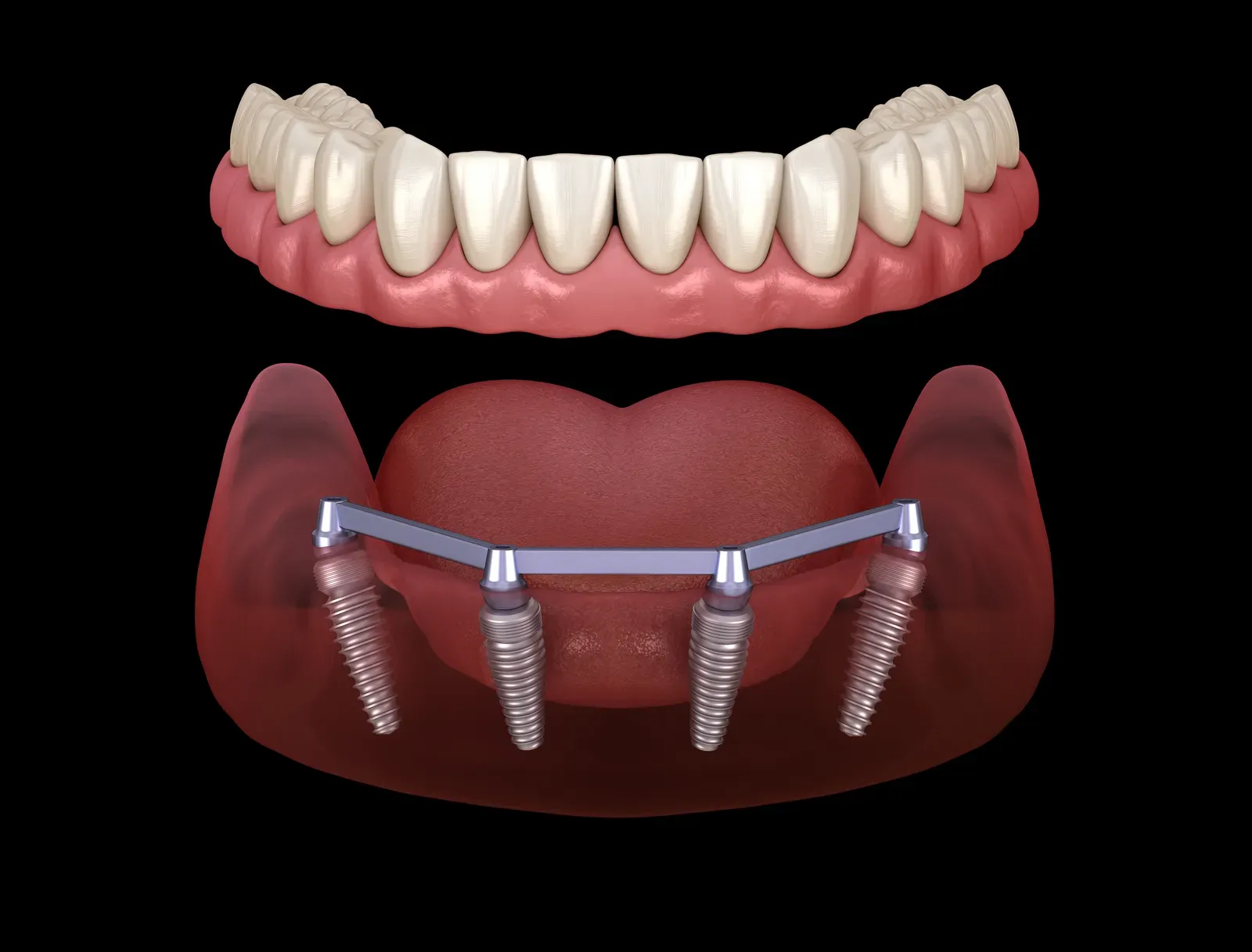
A missing tooth is never just a cosmetic gap. Every time you lose a tooth, the bone beneath it begins to lose density because it no longer receives the chewing pressure it needs to stay strong. Neighboring teeth gradually shift toward the open space, your bite changes, and chewing on that side of your mouth becomes awkward or uncomfortable. Many patients also notice changes in how their face looks over time, since the jawbone that once supported a full set of teeth starts to recede.
Dental implants address the problem at its source rather than simply covering the gap. A titanium post is placed directly into the jawbone, where it fuses with the surrounding bone over several months in a process called osseointegration. Once that post is fully integrated, it functions as a replacement tooth root, anchoring a custom-made crown that is shaped, shaded, and polished to match your natural teeth. The result chews, feels, and looks like a tooth you were born with, because it is secured the same way a natural tooth is.
At Elevate Dental Studio, we treat implant planning as a whole-mouth conversation, not a single-tooth fix. We evaluate your bone density, bite alignment, gum health, and long-term goals before recommending a path forward, so the implant we place is positioned correctly and built to hold up for decades of normal use, not just the first few years.
Not every missing tooth situation looks the same, and candidacy depends on factors specific to your mouth and health history. The signs below are common reasons patients in Haymarket come to us asking about implants.
Every mouth presents its own combination of these factors, and some conditions, like active gum disease or significant bone loss, need to be addressed before implant placement. That is why a thorough clinical evaluation and imaging review comes before any treatment recommendation.
Understanding what led to tooth loss helps us plan a more successful implant outcome and often several factors contribute together.
Deep cavities that reach the nerve can destroy enough tooth structure that saving the tooth is no longer realistic, leading to extraction and the need for a replacement.
Periodontal disease breaks down the bone and ligament that anchor teeth in place, which is the leading cause of adult tooth loss nationwide.
A hard impact from a fall, collision, or sports injury can fracture a tooth beyond repair or knock it out entirely, often with little warning.
Chronic clenching and grinding place excessive force on teeth, cracking enamel and loosening the supporting structures over time without the patient always noticing.
Conditions such as diabetes and osteoporosis can affect bone healing and gum tissue health, increasing the risk of tooth loss over a lifetime.
Smoking restricts blood flow to the gums, slows healing, and significantly raises the risk of both gum disease and implant complications.
Skipping routine checkups allows small problems to progress silently until the only remaining option is extraction rather than conservative treatment.
Some patients are born with naturally thinner enamel, weaker bone density, or missing teeth, making early tooth loss more likely regardless of oral hygiene habits.
Every implant case follows a careful, staged process so your new tooth integrates properly and lasts. Here is what to expect at Elevate Dental Studio.
We review your dental history, discuss your goals for tooth replacement, and answer your questions about the timeline, comfort, and what to expect during recovery.
Digital X-rays and 3D imaging let us measure bone density and map the precise position for the implant, identifying whether a bone graft is needed before placement.
We outline every stage of your treatment, from implant placement through final crown delivery, along with realistic timing and any preparatory procedures involved.
Under local anesthesia, the implant post is placed into the jawbone in a precise, minimally invasive procedure. Most patients return to normal activity within a day or two.
After several months of healing and bone integration, we attach your custom-shaded crown and schedule follow-up visits to confirm your bite feels natural and comfortable.
A well-placed implant does more than fill a gap. It restores function and confidence that often fades gradually after tooth loss, in ways patients do not fully notice until it is corrected.
Implants are anchored in bone, so you can bite into an apple or chew tougher foods without worrying about shifting or discomfort, unlike removable dentures.
Your crown is custom shaded to blend with surrounding teeth, so the replacement looks like it belongs in your smile rather than standing out.
Because the implant stimulates bone the same way a natural root does, it helps prevent the bone loss and facial sinking that follow untreated tooth loss.
Unlike a bridge, an implant does not require grinding down healthy adjacent teeth, keeping your remaining natural teeth untouched and intact.
Gaps, especially near the front teeth, can distort speech. A securely placed implant restores the structure your tongue and lips rely on to form clear sounds.
With proper care, implants are designed to last for decades, often outperforming bridges and dentures over the long run in both function and durability.
The strength of a dental implant depends almost entirely on the quality and volume of the jawbone surrounding it. When a tooth has been missing for an extended period, the bone in that area begins to shrink from lack of stimulation, a process that can continue for years if left unaddressed. This is why patients who have waited a long time after losing a tooth sometimes need additional preparation before an implant can be placed safely.
Bone grafting is a common and well-established solution. A small amount of graft material is placed in the area to encourage new bone growth, creating a stable foundation over several months. While this adds time to the overall treatment, it significantly improves the odds of long-term implant success and reduces the risk of future complications like implant loosening.
That is why our evaluation always begins with detailed imaging rather than a visual exam alone. Seeing the actual bone volume and density allows us to recommend the right approach the first time, rather than discovering a problem mid-treatment. Patients who follow through with any recommended grafting tend to have the smoothest healing and the most predictable long-term outcomes.
Implants do not get cavities, but the gum tissue and bone around them still need daily attention to stay healthy long term.
Use a soft-bristle brush around the crown and gumline to clear plaque without irritating healing tissue in the surrounding area.
Cleaning beneath and around the crown helps prevent gum inflammation, which is one of the few things that can threaten implant longevity.
Tobacco use slows healing significantly and is one of the leading risk factors for implant failure during the integration period.
Nighttime clenching places heavy force on implants just as it does on natural teeth, so a custom guard helps protect your investment.
Professional cleanings let us monitor gum health around the implant and catch early signs of irritation before they become a bigger issue.
Soreness, swelling, or looseness around the implant should be reported right away, since early intervention resolves most issues quickly.
These habits make a real difference, but they work alongside professional care rather than in place of it. Regular checkups remain essential for catching anything your daily routine might miss.
"We walked a patient through every stage of her implant, from the first scan to the final crown, and watching her smile freely in photos again reminded us why this work matters. That is the outcome we plan for with every case."
Answers to the questions our Haymarket patients ask most often about dental implants.
BOOK YOUR VISIT
Join the Haymarket families who trust Elevate Dental Studio. New patients and emergencies are always welcome.