Dental Implants
A fixed, permanent solution for patients facing extensive tooth loss, built around your bone structure, bite, and long-term comfort.
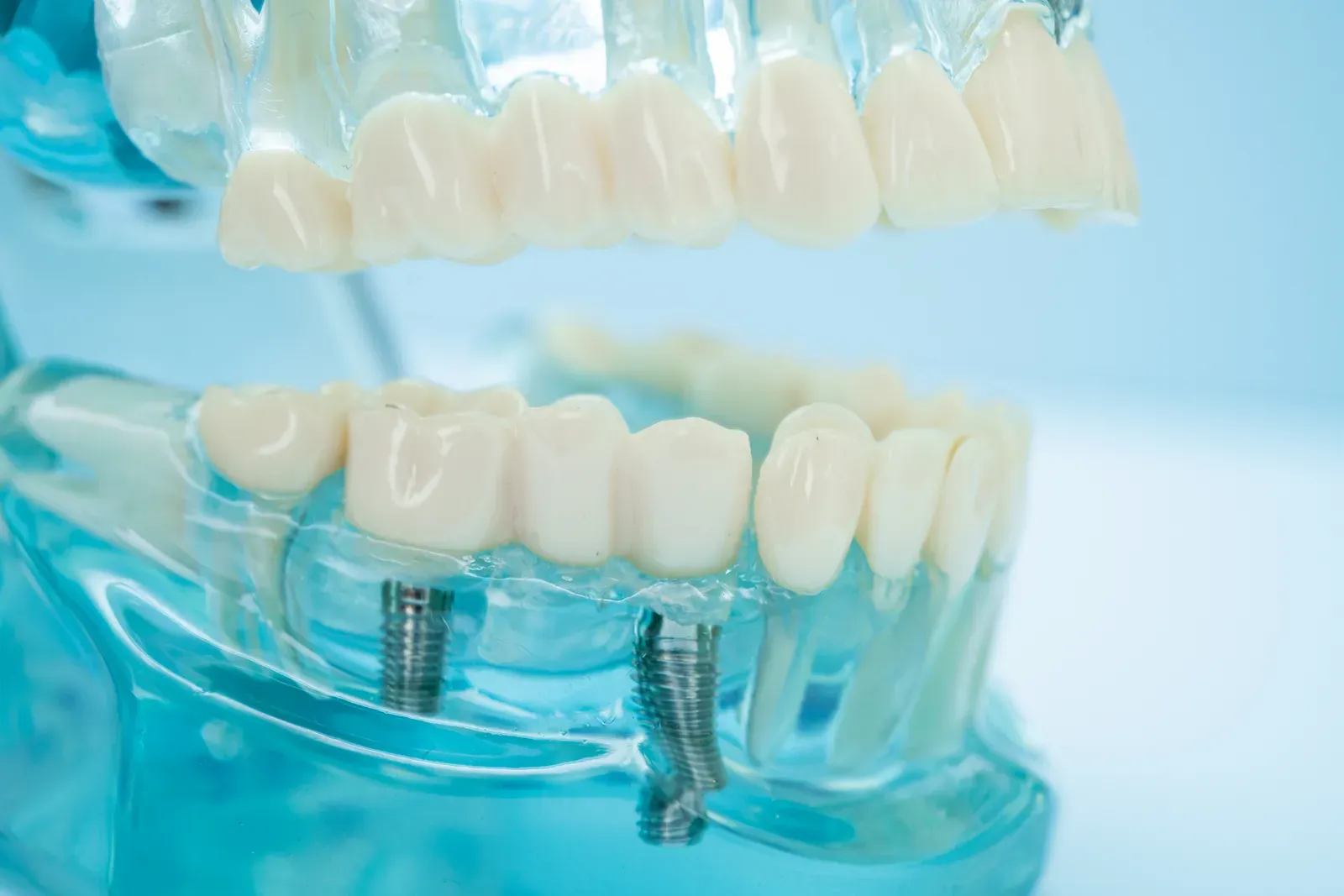
Losing most or all of your natural teeth changes more than your smile. It changes how you chew, how your jawbone holds its shape over time, and how confident you feel speaking or laughing in front of other people. At Elevate Dental Studio, full mouth implants give patients in Haymarket a way to replace an entire upper or lower arch with a fixed, implant-supported set of teeth that does not come out at night and does not shift when you bite into something firm.
Unlike a traditional denture that rests on the gums, a full mouth implant restoration is anchored directly into the jawbone using a small number of strategically placed implant posts, typically four to six per arch. Those posts support a custom-fitted bridge of teeth that is secured in place, giving you back real biting force and a stable foundation you can rely on for everyday meals, conversation, and confidence.
As the specialized full-arch branch of our broader Dental Implants program, this treatment is built on the same clinical foundation of careful diagnostics, 3D imaging, and individualized planning. Our team evaluates your jawbone density, bite alignment, and overall oral health before recommending a specific full mouth implant approach, so the plan we build is shaped around your mouth, not a generic template.
Full mouth implants are often the right fit for patients who have lost most of their teeth to decay, gum disease, or trauma, as well as patients who are frustrated with the limitations of a removable denture. The symptoms below tend to show up gradually, and many patients have simply learned to live around them for years before seeking treatment.
If several of these signs sound familiar, a thorough clinical evaluation is the right next step. Jawbone volume, gum health, and bite relationships all influence which full mouth implant approach will give you the strongest, longest-lasting result, and that is something best assessed in person rather than guessed at from symptoms alone.
Extensive tooth loss is rarely caused by a single event. More often, several factors compound over years, gradually weakening the structures that hold teeth in place until the damage becomes irreversible.
Long-standing gum infection destroys the bone and ligament that anchor teeth in the jaw. Once enough support is lost, teeth loosen and eventually require extraction across multiple areas of the mouth.
Cavities left untreated spread into the nerve and root, eventually causing abscesses. When this happens repeatedly across several teeth, the structural damage can become too extensive to repair conservatively.
Chronic clenching and grinding wear down enamel, fracture teeth, and overload the supporting bone. Over time, this mechanical stress accelerates breakdown in teeth that are already structurally weak.
As we age, bone density naturally declines and gum tissue recedes, leaving roots more exposed and vulnerable. These changes make existing dental work more prone to failure.
Tobacco restricts blood flow to the gums, slows healing, and significantly increases the risk and speed of periodontal breakdown, often leading to multiple tooth losses over a relatively short period.
Conditions such as uncontrolled diabetes impair the body's ability to fight infection and heal tissue, making gum disease progress faster and harder to control without medical and dental coordination.
Gaps in preventive visits allow small problems to go unnoticed until they become large ones. By the time pain or visible damage appears, several teeth are often affected simultaneously.
Full mouth implant treatment unfolds in carefully sequenced phases. Every plan is customized to your bone volume, bite, and personal goals, and we walk you through each stage before it begins so there are no surprises along the way.
We start by listening to your concerns, reviewing your dental history, and discussing what you want your daily life to look like after treatment, whether that is confident eating, speaking, or simply a lower maintenance routine.
Using 3D CBCT imaging, digital scans, and a full periodontal assessment, we measure your bone density, nerve positioning, and remaining tooth condition to determine exactly how many implants your case requires.
We map out implant placement sites, decide whether a fixed bridge or implant-supported denture best fits your anatomy, and outline a realistic timeline, including whether any bone grafting is needed beforehand.
Implant posts are placed under local anesthesia or sedation, and in many cases a temporary fixed bridge is attached the same day so you are never left without teeth during the healing period.
Once healing is confirmed through follow-up imaging, we deliver your final, permanent restoration and schedule routine maintenance visits to protect your implants and new bite for years to come.
Full mouth implants are designed to do more than fill empty spaces. They restore real chewing function, protect your remaining bone, and give you a result that holds up to daily life without constant adjustment or worry.
Because implants fuse directly with your jawbone, you regain significantly more biting force than any removable denture can provide, opening your diet back up to foods you may have avoided for years.
Implant posts stimulate the bone the same way natural tooth roots once did, helping slow the facial collapse and sunken appearance that typically follows long-term tooth loss.
There is no adhesive, no slipping, and no need to remove your teeth at night. Your new arch functions and feels like a natural, permanent part of your mouth.
Many patients tell us the biggest change is emotional, not physical. Speaking, laughing, and smiling without hesitation tends to restore a level of confidence that had quietly faded over the years.
One of the most important factors in full mouth implant planning is the amount of healthy bone available to anchor each implant post. When teeth are lost, the surrounding bone begins to resorb almost immediately, and the longer the area goes untreated, the more volume is lost. This is why patients who have worn dentures for many years often require additional planning compared to those who are losing teeth more recently.
Advanced implant techniques, including angled implant placement in denser areas of the jaw, allow many patients to receive a full arch of fixed teeth without extensive bone grafting, even when bone volume is reduced. Our 3D imaging lets us identify exactly where the strongest bone is located and plan implant positions that take full advantage of it, often shortening treatment time and reducing the number of surgical steps required.
In cases where bone loss is more significant, a staged approach involving grafting prior to implant placement may offer a stronger, more predictable long-term foundation. We discuss these tradeoffs openly during your evaluation so you understand exactly why a particular approach is being recommended for your specific anatomy.
Full mouth implants are built to be durable, but a few consistent daily habits go a long way toward protecting your investment and keeping your gums healthy around each implant post.
Use a water flosser or interdental brushes to clear food and plaque from beneath your fixed restoration, where a standard toothbrush alone cannot always reach.
Ice, hard candy, and un-popped popcorn kernels can chip porcelain or stress the restoration's connection points over time.
Professional cleanings allow us to check implant stability and gum health around each post well before small issues become larger problems.
If you grind your teeth, a custom night guard protects your new restoration from unnecessary wear while you sleep.
Smoking slows healing around implants and raises the risk of peri-implant disease, which can threaten long-term implant stability.
Looseness, discomfort, or unusual swelling should be reported quickly so we can address it before it affects your implant's long-term success.
These habits support your results, but they are not a substitute for regular professional monitoring. Routine visits remain the best way to catch and resolve small concerns early.
"We treat every full mouth implant case as a long-term partnership. Our goal is not just a new set of teeth, but a result you can rely on for daily living, year after year."
Answers to the questions patients in Haymarket ask most often about full mouth implants.
BOOK YOUR VISIT
Join the Haymarket families who trust Elevate Dental Studio. New patients and emergencies are always welcome.